
Loose-leaf black tea
Chinese Black Tea Wholesale
Chinese black tea (hongcha) is fully oxidised, but it does not taste like a default Assam or Ceylon breakfast blend. Many Chinese lots are built as single-origin cups: floral, cocoa, dried-fruit, or a clean malt — not a one-note tannin hit for milk and sugar.
Gongfu grading is about leaf integrity and how the lot will be retailed. Whole-leaf gongfu is for tins and tasting menus. Broken leaf has a place as a blending base when you already run a house mix. The mistake is pricing them as if they were the same tea.
Evaluation samples are free of charge; the buyer covers the courier cost. Most teas from 5 kg.
How to read gongfu leaf grades
Names vary by producing area. What travels across origins is leaf size, bud content, and whether the lot is meant to stand alone or disappear into a blend.
| Grade | Leaf | Use |
|---|---|---|
| Fine gongfu (bud-forward) | High bud ratio, even twist, low dust | Single-origin retail, tasting flights, and buyers who sell a named Chinese black |
| Standard gongfu (whole leaf) | Fuller leaf, still intact, more cups per kilo | Core specialty black when you want origin character without first-flush pricing |
| Broken / blending leaf | Smaller particles; faster colour and strength | House blends and programmes that need a Chinese malt note inside a mix — not a stand-in for gongfu |
Typical origins
Anhui & Jiangxi
Classic gongfu districts: floral-cocoa profiles and a long history of export grading. Useful when buyers expect “Chinese black” rather than a South Asian breakfast cup.
Yunnan
Larger leaf, honey and spice, often a rounder body. A different conversation from small-leaf eastern gongfu.
Fujian & the southeast
Includes smoked and unsmoked traditions. Smoke is a process choice: specify it, do not assume it.
Processing
-
Wither & roll
Withering sets aroma precursors. Rolling breaks the leaf enough to oxidise evenly without turning the lot into dust.
-
Full oxidation
Chinese black tea is taken through oxidation until the leaf is copper-red. Stopping early is oolong territory; rushing it is the usual path to a flat, stewed cup.
-
Drying & optional smoke
Drying locks the grade. Pine smoke is applied only when that style is the brief. An unsmoked gongfu should not smell of pine.
Buying notes
- Decide first: single-origin cup or blending base. That choice drives grade, price, and how you describe the tea to your customers.
- Most teas from 5 kg. A few grades carry a higher order minimum; that figure is on the product spec sheet.
- Evaluation samples are free of charge; the buyer covers the courier cost.
- Chinese black tea is more forgiving in storage than green tea, but still hates heat, light, and pantry odours.
- Lots can be selected to meet EU MRLs; batch testing available on request (Eurofins, approx. 2 weeks, at cost).
Available lots
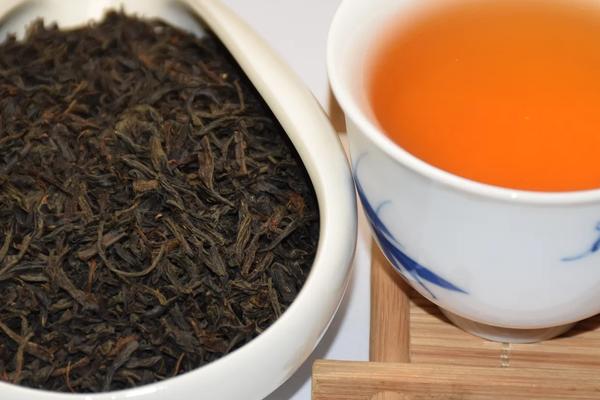
Anhui, China
Keemun Gongfu
The "Queen of Black Tea"—A century-old legacy defined by the legendary Keemun Fragrance.
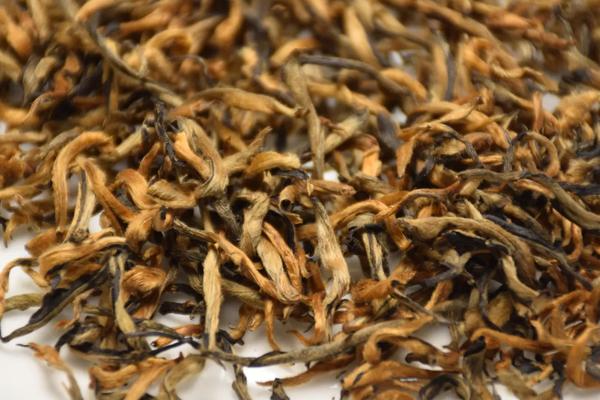
Guangdong, China
Shaoguan Mi Hong
A sip of pure mountainous nectar, echoing the rich terroir of Guangdong.
Sourcing a black tea not listed here? Tell us your spec .
Frequently asked questions
How is Chinese black tea different from Indian or Ceylon black tea?
Cultivar, leaf size, and the gongfu tradition produce a cup that is often floral or cocoa-led rather than a standard breakfast tannin. Use Chinese black when you want a named origin; use South Asian blacks when you need a blending workhorse. They are not interchangeable lots.
Should I buy gongfu whole leaf or broken leaf?
Whole-leaf gongfu is for single-origin retail. Broken leaf extracts faster and is for blending. Mixing the two in one tin usually disappoints both jobs.
How do I start a black-tea order?
Evaluation samples are free of charge; the buyer covers the courier cost. Most teas from 5 kg. Send the grade band, smoked or unsmoked, and whether the lot must stand alone in the cup.
Related reading
Wholesale inquiry
Looking for black tea?
Tell us the cultivar, grade, harvest window, and volume. Evaluation samples are free of charge; the buyer covers the courier cost. Most teas from 5 kg.