
Black Tea
Keemun Gongfu
The "Queen of Black Tea"—A century-old legacy defined by the legendary Keemun Fragrance.
Basic Information
- Chinese Name
- Origin
- Qimen, Anhui, China
- Elevation
- 600 m
- Harvest
- Pre-Qingming (First Flush)
- Min. Order Qty (MOQ)
- 100 kg
祁门工夫 / qí mén gōng fū /
Product Story
About Keemun Gongfu
🍵 Tea Name
Keemun Gongfu (Qimen Hong Cha)
📍 Terroir & Origin
- Precise Origin: Qimen County, Anhui Province, China — the home of Keemun black tea since its creation in 1875. The county sits near 30°N, with persistent mist and mineral-rich acidic soils.
- Altitude & Environment: Gardens around 600 metres. Cloud and drizzle stretch the spring flush; the leaf accumulates the orchid–honey note that the trade calls Keemun Fragrance.
- Cultivar: Qimen Zhuye, the local landrace. It is the plant behind the dried-fruit and orchid profile; substituting a coastal cultivar changes the tea.
🌱 Plucking Standards
- Harvest Timing: Pre-Qingming lots are the core of this Gongfu line: cooler nights, slower growth, and a higher share of amino acids before the summer heat raises astringency.
- Plucking Requirements: A bud with one or two young leaves, kept intact so the later sifting stages can make a true Gongfu leaf — even, wiry, and free of dust and stalk where the grade requires it.
🔥 Processing Techniques
Gongfu here names the refinement after the first firing, not a brewing method. More than a dozen sorting and re-firing steps turn maocha into the export leaf.
- Withering: Spread leaf loses moisture until it is pliable and the grassy note begins to recede.
- Rolling: Cell walls are broken so polyphenols can oxidise evenly in the next step.
- Oxidation (fermentation): The pile is watched for colour and aroma. This is where the ruby liquor and the Keemun Fragrance are set — orchid, honey, and dried fruit, not a generic malt.
- Firing: Heat stops oxidation and dries the leaf for storage.
- Refinement: Sifting, sorting, and re-firing remove stalk and dust and even the grade. That labour is what “Gongfu” refers to on this lot.
👅 Tasting Notes
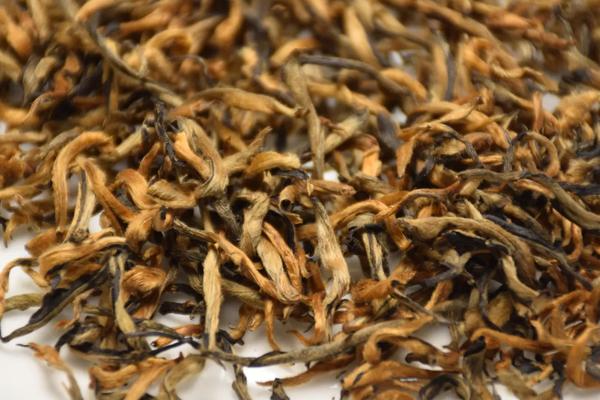
- Appearance: Fine, dark, slightly twisted leaf with a subdued gloss. Gongfu should look composed, not broken.
- Liquor: Vibrant ruby-red and bright in the cup.
- Aroma & Palate: The Keemun Fragrance: orchid over honey and dried fruit. The taste is mellow and refreshing, with a lingering sweetness rather than a heavy cocoa roast. The style drew a Gold Medal at the 1915 Panama-Pacific International Exposition — a historical mark, not a current lab claim.
🫖 Brewing & Storage
- Recommended brewing: A white porcelain gaiwan, or a Yixing zisha teapot if you want more heat retention. Water just off the boil (about 90°C–95°C). Around 4–5 g in a 110–120 ml gaiwan; rinse once, then 10–15 seconds on the first drinkable steep, adding time as the leaf opens. It also works in a pot at a lighter ratio for a longer Western steep.
- Storage & shelf life: Cool, dry, airtight, and odour-free. Fully oxidised Keemun is more stable than a pan-fired green; the labelled shelf life is 24 months from production.
Full Breakdown
Technical Specifications
- Tea Type
- Black Tea
- Oxidation Level
- 100%
- Cultivar / Variety
- Qimen Zhuye (Landrace species)
- Full Origin
- Qimen County, Huangshan City, Anhui Province, China
- Processing Method
- Withering -> Rolling -> Fermentation -> Firing -> Refinement (Sifting, Sorting, Re-firing)
- Shelf Life
- 24 months
- Storage Conditions
- Cool, dry, airtight, and odor-free environment
- Production Lead Time
- 7 days
- Export Packing
- Food-grade multi-layer aluminum foil bags, export cartons
Explore More
You May Also Like
 Black Tea Conventional
 Guangdong, China
Shaoguan Mi Hong
A sip of pure mountainous nectar, echoing the rich terroir of Guangdong.
 Jasmine Tea EU Compliant
 Fujian, China
Jasmine Dragon Pearl
Hand-rolled green tea pearls imbued with the ethereal fragrance of summer jasmine blossoms.
 Green Tea Organic
 Zhejiang, China
Organic Gunpowder Tea
Green pearls of purity: Hand-rolled essence from certified organic mountains.
 Green Tea Organic
 Hubei, China
Organic Enshi Yulu
A Tang Dynasty legacy: China's rare steamed green tea with a soul of pine needles.
Ready to Source?
Interested in Keemun Gongfu?
Contact our export team for pricing, availability, sample orders, and shipping details.