
Green Tea
West Lake Dragon Well (Long Jing)
The pinnacle of Chinese green tea with a sweet, chestnut-like profile.
Basic Information
- Chinese Name
- Origin
- Xihu, Zhejiang, China
- Elevation
- 200 m
- Harvest
- Pre-Qingming (First Flush)
- Min. Order Qty (MOQ)
- 10 kg
西湖龙井 / xī hú lóng jǐng /
Product Story
About West Lake Dragon Well (Long Jing)
🍵 Tea Name
West Lake Longjing (Dragon Well)
📍 Terroir & Origin
- Precise Origin: The West Lake Scenic Area in Hangzhou, Zhejiang Province. Historically, there are five recognized core sub-regions: Shi (Lion Peak), Long (Dragon Well Village), Yun (Cloud Forest), Hu (Tiger Spring), and Mei (Meijiawu). The tea from Lion Peak is celebrated as the absolute pinnacle due to its peerless microclimate.
- Altitude & Environment: Tea gardens are generally situated between 100 and 300 meters above sea level. Surrounded by mountains on three sides and facing the lake on one, the area is constantly draped in mist. The soil is predominantly white sand soil (weathered quartzite residual soil), which is loose, exceptionally well-aerated, slightly acidic, and rich in phosphorus, potassium, and other trace elements. This is the geological secret behind the unique mineral character of Lion Peak Longjing.
- Cultivars: There are two core cultivars. The first is Qunti Zhong (the local heirloom old tree), which buds late but has deep roots, rich internal substances, and a profoundly mellow taste; it is the authentic soul of West Lake Longjing. The second is Longjing 43, a national premium cultivar developed by the Tea Research Institute, which buds early, is cold-resistant, and produces an extremely elegant and uniform dry leaf.
🌱 Plucking Standards
- Plucking Time: Strictly governed by the solar terms. The highest grade is Mingqian tea (plucked before the Qingming Festival in early April), when the buds have rested all winter, resulting in exceptionally high amino acid content and an incredibly fresh taste. Next is Yuqian tea (plucked before Guyu in mid-April), which offers a richer, more robust flavor profile due to the rising temperatures and increased tea polyphenols.
- Plucking Requirements: Exceptionally rigorous, often referred to by farmers as "plucking the heart." Special-grade Longjing predominantly consists of single buds (resembling a lotus heart, called Lianxin) or one bud with one newly unfolded leaf (resembling a bird's beak, called Queshe). Pluckers must follow the rule of "early, tender, and frequent," and adhere strictly to discarding four types of leaves: rain-soaked leaves, diseased leaves, purple buds, and weak leaves.
🔥 Processing Techniques West Lake Longjing is an unfermented green tea. Its creation relies entirely on the tea master's seamless execution of "Ten Hand Techniques" (grasping, tossing, shaking, piling, throwing, buckling, pressing, grinding, pushing, and grabbing) in a specialized smooth iron wok.
- [Step 1] Tan Fang (Withering/Spreading): Freshly plucked leaves are spread thinly on bamboo trays in a cool, ventilated area for several hours. This reduces moisture by about 15%, dissipates grassy odors, promotes the breakdown of proteins into free amino acids, and softens the leaves for roasting.
- [Step 2] Qing Guo (Primary Roasting/Kill-Green): The wok temperature exceeds 200 degrees Celsius. The master uses bare hands to rapidly deactivate polyphenol oxidase enzymes, locking in the green color, while using tossing, grasping, and pressing motions to initially straighten and flatten the leaves.
- [Step 3] Hui Chao (Cooling and Moisture Regain): The leaves are removed from the hot wok and spread on bamboo trays to cool. This allows unevaporated moisture inside the leaves to redistribute evenly, preventing them from being dry on the outside but wet on the inside. Tea dust and broken fragments are sifted out during this stage.
- [Step 4] Hui Guo (Secondary Roasting and Final Shaping): The wok temperature is lowered to between 80 and 100 degrees Celsius. This is the crucial step that forms Longjing's flat, smooth, and straight appearance. By constantly shifting hand techniques, the master reduces the moisture content to around 5%. The aroma is fully released, and the leaves become smooth, straight, and acquire their signature color.
😋 Tasting Notes
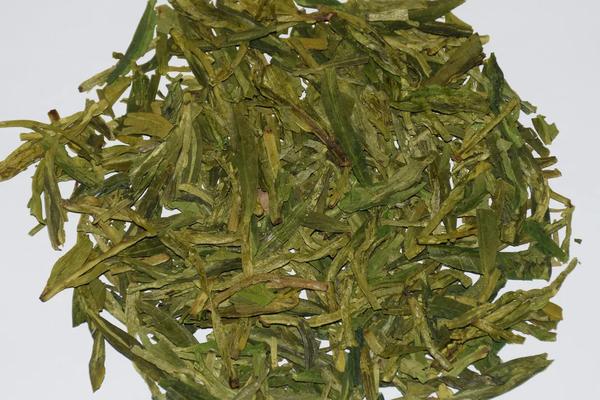
- Appearance: Flat, smooth, straight, and sharp-pointed (like a bowl nail), with uniform sizing. Notably, top-tier Lion Peak Longjing is not vibrant green but features a yellowish-green "unpolished rice color" with fine, faint white fuzz visible on the surface.
- Liquor: Bright apricot-green and crystal clear, resembling a pure spring pool, with absolutely no cloudiness.
- Aroma & Taste: The dry tea emits a high, sharp fragrance. Upon brewing, the aroma is elegant like wild orchids in an empty valley, accompanied by Longjing's signature fresh chestnut or toasted soybean notes. The taste is remarkably fresh, sweet, and mellow, with zero bitterness or astringency. After swallowing, the Hui Gan (returning sweetness) is rapid and long-lasting, leaving a sweet and clear sensation in the throat.
- Infused Leaves: Tender, bright green, with distinct veins. They stand upright in the water like spring bamboo shoots, displaying one bud and one leaf or one bud and two leaves. They are incredibly soft and elastic to the touch.
🫖 Brewing & Storage
- Recommended Brewing Method:
- Teaware: A tall, transparent borosilicate glass is preferred to watch the "tea dance" as the leaves unfurl and stand upright. A white porcelain Gaiwan is also excellent.
- Water Temperature: Never use boiling water! High-quality mineral or purified water heated to 80 - 85 degrees Celsius is ideal to avoid scorching the tender buds, which makes the liquor bitter and yellow.
- Leaf-to-Water Ratio: Approximately 1:50 (e.g., 3 grams of dry tea to 150 milliliters of water).
- Steeping Time: The "Mid-Drop" method is highly recommended. Pour one-third of the warm water to wet the leaves, gently swirl the glass to awaken the aroma, and then pour from a height to fill the glass. Let it steep for 30 seconds to 1 minute before drinking. Refill when one-third of the liquor remains. It typically yields 3 to 4 excellent infusions.
- Storage Standards & Shelf Life: Green tea is highly susceptible to oxidation and odor absorption. It must be stored strictly away from light, completely sealed, moisture-proof, and odor-proof. For daily consumption, keep the sealed tea in the refrigerator (0 - 5 degrees Celsius). Traditional tea farmers often use a quicklime vat to maintain absolute dryness and preserve the fresh aroma. The optimal drinking period is within 12 to 18 months of production.
Full Breakdown
Technical Specifications
- Tea Type
- Green Tea
- Oxidation Level
- 0%
- Cultivar / Variety
- Longjing 43
- Full Origin
- Xihu County, Hangzhou City, Zhejiang Province, China
- Processing Method
- Tanfang - Spread-cooling,Qingguo - Green-killing/Initial Pan-firing,Huichao - Cooling & Moisture Regaining,Huiguo - Final Shaping & Drying
- Shelf Life
- 36 months
- Storage Conditions
- Cool, dry place, away from light and strong odors.
- Production Lead Time
- 3 days
- Export Packing
- Food-grade multi-layer aluminum foil bags, export cartons
Explore More
You May Also Like
 Green Tea Organic
 Zhejiang, China
Organic Gunpowder Tea
Green pearls of purity: Hand-rolled essence from certified organic mountains.
 Green Tea Tested
 Zhejiang, China
Da Fo Longjing
Experience the zen of high-mountain mist with the lasting chestnut aroma of Big Buddha Dragon Well.
 Green Tea Organic
 Hubei, China
Organic Enshi Yulu
A Tang Dynasty legacy: China's rare steamed green tea with a soul of pine needles.
 Green Tea Conventional
 Jiangxi, China
Lushan Yunwu
Born in the dancing mist: A sip of the ethereal spirit of Mount Lu.
Ready to Source?
Interested in West Lake Dragon Well (Long Jing)?
Contact our export team for pricing, availability, sample orders, and shipping details.